Don’t Be a Lone Ranger

I grew up on old spaghetti westerns, and black and white series such as The Lone Ranger. Every week, on his stallion, Silver, The Lone Ranger would cry out, “Hi-Yo, Silver!” and off they’d go on a new adventure, the ever faithful Tonto following close at their heels.
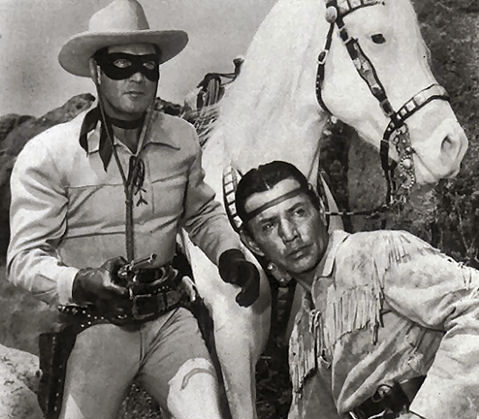
The only girl in a household of boys, I greatly admired The Lone Ranger’s courage and his untouchable aloofness. My brothers were rambunctious, rowdy and funny. Most days I gladly followed them around trying to join in their hi-jinks, such as jumping from the top bunk, or catching Black Widow spiders in canning jars. But sometimes I just wanted to be alone with my thoughts. Sometimes I needed to step back from the hilarity and bravado, and just think.

I came to appreciate this same quality in The Lone Ranger. I knew in my heart he wore a mask not only so he wouldn’t be identified and lauded for his good deeds. I suspected he also wore it because he liked having that bit of privacy that kept him a little hidden from everyone else. He was a deep thinker, too, I was sure of it.

I still need lots of time alone, which is pretty typical for a writer. But I’ve come to suspect I rely too much on my own thoughts and perceptions when I could be relying–a little at least–on the wisdom and collective writing experience of others.

I’ve never been the type to join clubs, but I see I’ve allowed my natural tendency to enjoy my own company to rob me of the natural camaraderie that often exists between writers. I didn’t realize my hunger to talk shop until I began beta reading five years ago. Since then I’ve met so many talented and wonderful writers and, as a bonus, some of them have become good friends.

I‘ll probably never lose my admiration for The Lone Ranger’s bravery, mask and all. Though it does occur to me all these decades later that courage doesn’t require a mask. All it needs is a strong enough reason to be pushed out of one’s comfort zone, not unlike the bravery it took to jump off that top bunk.

Hearing the Grass Grow

“If we had a keen vision of all ordinary human life, it would be like hearing the grass grow or the squirrel’s heartbeat, and we should die of the roar which lies on the other side of silence. As it is, the quickest of us walk about well-wadded with stupidity.” George Eliot

I’ve read this George Eliot quote often through the years, and every time I do it hits me how blind I am to the wonders of ordinary life. I would like to think I’m not quite as far gone as to walk about “well-wadded with stupidity” which is another way of describing someone who is on automatic pilot, a sleepwalker blinded to the beauty of the commonplace.

But don’t we all at times find ourselves blind to (or bored with) the familiarity of our everyday lives? This may be one reason writers write. We long to experience adventures far beyond the scope of mundane reality, adventures created and choreographed by our own imaginations.

Hearing the Grass Grow

I was blessed to discover my writing self early in life. Doubly blessed to have spent many summers isolated in the haven of my backyard fort, scribbling my heart out on lined pencil tablets. And while I may not have exactly heard the grass grow, I did experience delicious wafts from the cucumbers in my neighbor’s garden, vying with the scent of my suntan lotion and the pleasant voice of Roger Miller singing King of the Road on someone’s transistor radio.

Sometimes a lady bug landed on my arm and I dropped my tablet like a hot potato so that I could take in the wonder of the tiny bug tickling my bare flesh. Or it might be a knee scab that suddenly snagged my attention, and again the writing was temporarily forgotten while I picked at it, anxious to get a peek at the puckery skin beneath. (I was always, it seemed, wanting to get to the inside of things.)

As a child, I didn’t consider such distractions to be interruptions. Maybe my inner critic hadn’t yet set up shop. Writing my heart out and stopping to lollygag and absorb the life around me, in the form of a lady bug or the fresh scent of cucumber, contributed to my unique writer’s perception. I was unaware then how generously I allowed myself to see and appreciate the ordinary all about me. Instinctively, I knew to not hold my writing talent too tightly. I knew to take it seriously but at the same time to hold it loosely–loosely enough to set it aside for the sake of admiring the beautifully ordinary world unfolding all about me.

Word Doodles

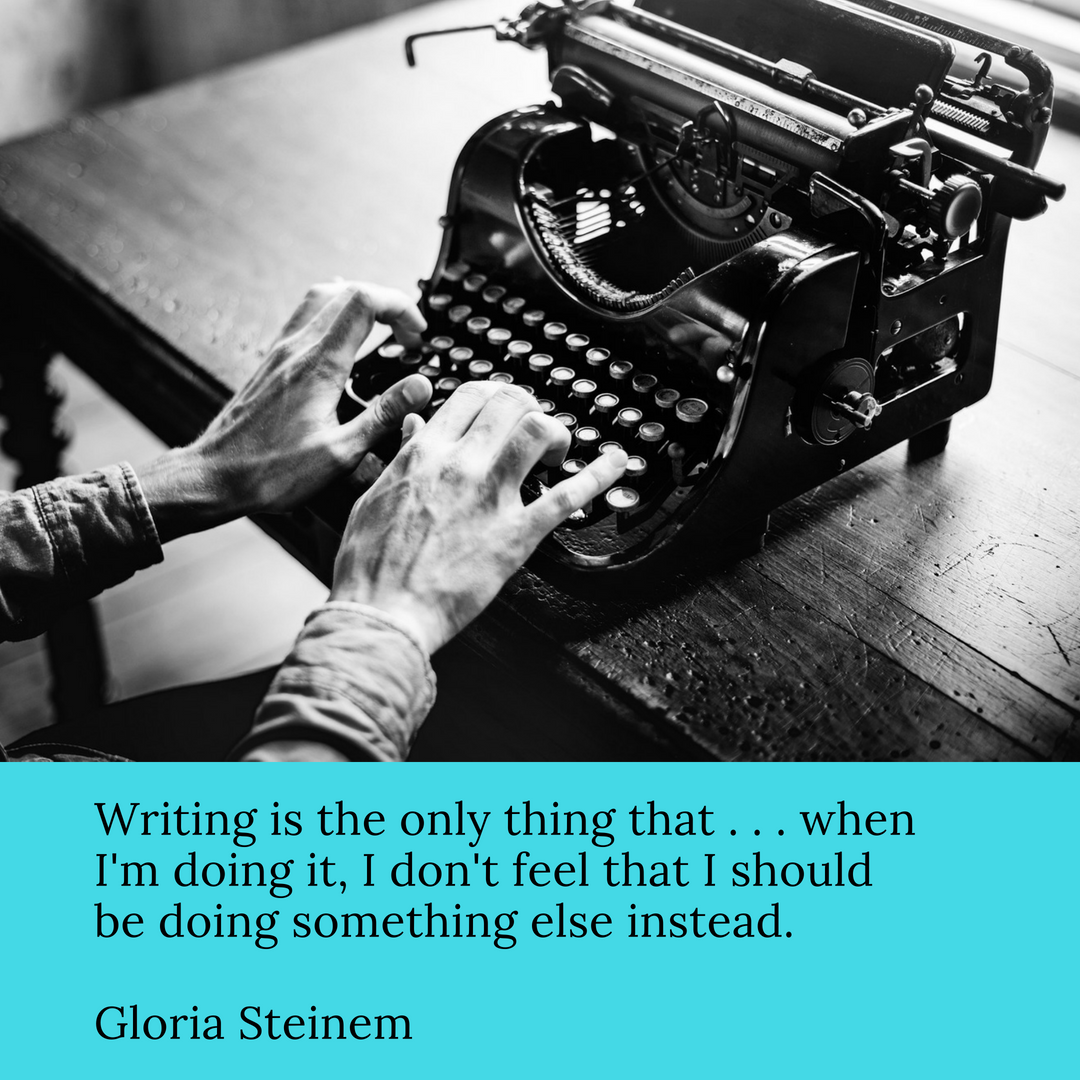
Writing is the o

I wish I could remember that writing exercises are a good thing, and not meant as some kind of punishment. Maybe then I’d do them on a regular basis, even if I dragged my feet every step of the way.

My muse doesn’t care for such preambles; she finds writing exercises a bore, and a waste of time. But I’m beginning to suspect that her impulsive nature is exactly why my creativity is in need of a warm up. I love spontaneity in writing, it’s what makes the act of creative writing so satisfying and fun. But if I haven’t first warmed up my writing muscles, I’m left with writing with no depth because I followed with glee the sparkle and glimmer of my muse’s colorful meanderings, only to discover she’d left me right smack in the middle of a troublesome description, or a clever bit of dialogue.

My last blog post included an objective correlative writing exercise. Today’s exercise is a bit simpler: look around you at your surroundings, and pick one thing to write about in three sentences. It might be a framed painting hanging on your wall, a pile of dirty clothes on the floor or your fat cat snoozing at the foot of your bed, or the arm of your couch. Say what comes to mind first about your subject, in three sentences. That’s it. You’re not going for spectacular writing here, all you’re doing is warming up your creativity. Here’s a few of my own little word doodles as a sample. As you can see, these are plain little word pictures, nothing more:

Cat

Curl up like a fur ball,

your boneless fluff

a rug for my feet.

Metal Chair

Who needs this reminder

of school assemblies:

cold metal on tender bottoms?

Purse

When I was little,

joy was digging through a grownup’s purse,

sifting its contents for clues to my own femaleness.

Socks

How can I take you seriously

when one of you

is forever losing its mate?

You get the idea. There is nothing daunting here, you can even do these while drinking your first cup of coffee of the day. In fact, I find I do much better when my conscious mind isn’t fully awake, for that means my muse is off somewhere (probably admiring her face in a mirror), not even paying me the least bit of attention.

Atmosphere in Fiction

Photo by by Ryan McGuire.

What is the mood of your story? I just read a deliciously creepy short story, Slip, by horror and suspense writer, S.H. Livernois.

The atmosphere of her tale begins innocuously enough, but this is horror; I knew things wouldn’t go smoothly for long, and the author didn’t disappoint. Her sentences are crafted with just the right telling details to pull the reader into her fictional world. 

Years ago I stumbled upon a writing exercise that I found much more challenging than the writing prompts I’m used to. I’m not sure who named it, but it’s called The TS Eliot/John Gardner Killer Exercise. Would you like to be able to construct a particular mood or atmosphere in your stories?

This exercise is quite possibly the most difficult, demanding and important exercise a writer can ever do. The poet and critic, TS Eliot, coined the phrase “objective correlative” to designate what he believed was the most important element in writing: rendering the description of an object so that the emotional state of the character from whose point of view we receive the description is revealed without ever telling the reader what that emotional state is or what has motivated it.

The late John Gardner, recognized in his lifetime as the leading creative writing teacher in the United States, developed the following exercise for students: A middle-aged man is waiting at a bus stop. He has just learned that his son has died violently. Describe the setting from the man’s point of view without telling your reader what has happened. How will the street look to this man? What are the sounds, odors and colors that this man will notice? What will his clothes feel like? Write a 250 word description.

Here’s an example of how this exercise might look:

Car keys dangled from the man’s lifeless hands as he waited in the breezeless shelter for the 5:12 express. The afternoon sun bore down on him, lighting up his grief, but igniting nothing; his heart was still an icy thing. His wife had called him cold. What would she think now? Nothing, he realized; she wouldn’t be thinking of him. So much was suddenly irrelevant.

After the call, he’d looked around his office trying to recognize the everyday fixtures of his life. He needed to do something but nothing made sense anymore. His mind only offered three options: stay at work, run away, or go home. He didn’t like the first, the second was appealing but too confounding presently, so he chose the third.

At the bus shelter women in cotton shifts and sandaled feet stood with men in rumpled linen suits damp with sweat. They steered clear of the man sitting alone on the scorched wood of the slatted bus bench. They vied instead for a little elbow room in the open-air shade of the tall downtown buildings and wondered what was wrong with the nut job. Still, some noticed, his linen suit, the color of mocha according to his wife, was dry and appeared freshly pressed. He did not fan himself with the evening edition of the paper or crane his neck every few minutes to see if the bus was coming. He just stared blankly ahead, slightly slumped on the bench, car keys in hand, waiting.

Understated: sometimes less really is more

As seen in the example exercise, you don’t have to overwhelm the reader with emotion in order to convey what your character is experiencing. Atmosphere too needn’t be portrayed with a heavy hand. Assume your reader is intelligent and can read between the lines. With well-chosen details that paint just the picture you have in mind, your story will throb with life, and your readers will keep coming back for more.

(Photo by Ryan McGuire.)